

Opportunity
Explore opportunities in the contemporary art market, where collectors and investors access strategic investment potential, cultural value, and long-term growth supported by both qualitative insights and evolving market dynamics.

Inflation Hedge for Black Swan Events
Contemporary art, including works by carefully selected emerging artists, has shown resilience during periods of inflation and sudden market disruptions. When traditional asset classes experience volatility, certain segments of the art market can preserve value and help stabilise a diversified portfolio. As an alternative investment, contemporary art offers a unique hedge during Black Swan events, allowing investors to capture cultural relevance while protecting long-term purchasing power in unpredictable economic cycles.
Diversification
Contemporary art—ranging from established figures to emerging artists—offers meaningful diversification benefits within an investment portfolio. Because the art market often moves independently from equities, bonds, and real estate, allocating even a small portion to art can reduce overall volatility and improve risk-adjusted returns. By adding culturally significant assets that behave differently in shifting economic cycles, contemporary art becomes a strategic investment tool, enhancing stability while opening exposure to a unique, non-correlated market segment.

Risk/Return Ratio
Incorporating contemporary art into an investment portfolio can enhance the overall risk/return ratio by lowering portfolio Beta and smoothing Standard Deviation across market cycles. Because the art market often demonstrates low correlation with traditional asset classes, its performance can stabilise returns during periods of equity or fixed-income volatility. As an alternative investment, contemporary art introduces a distinctive return profile—one driven by cultural demand dynamics rather than macro-market swings—helping collectors & investors optimise long-term performance while managing downside risk.
Wealth Accumulation
Contemporary art has become a compelling long-term investment vehicle for wealth accumulation, driven by scarcity, cultural relevance, and sustained global demand. As the art market expands across new regions and digital platforms, collectors and investors can benefit from gradual appreciation in works by both established and emerging artists. Unlike traditional assets, contemporary art often exhibits unique value trajectories shaped by critical recognition and market momentum, enabling investors to build cultural capital while compounding financial value over time.
Cultural Capital
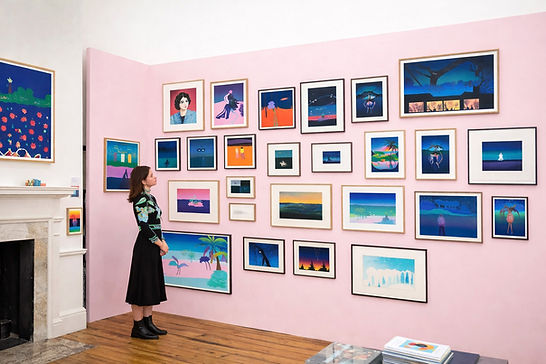
Investing in contemporary art offers more than financial return—it builds cultural capital that enhances an collector’s intellectual and social positioning. As the art market evolves, collecting thoughtfully selected works allows individuals to participate in cultural conversations, support emerging creativity, and align their investment portfolio with meaningful aesthetic values. Contemporary art, therefore, becomes both an investment and a form of symbolic wealth, strengthening personal identity, network access, and cultural influence over time.